DIGITAL LIFE & PRIVACYENTRY 08.11
May I check my phone during dinner?
A way to say it
Adapted from The Odd Guide
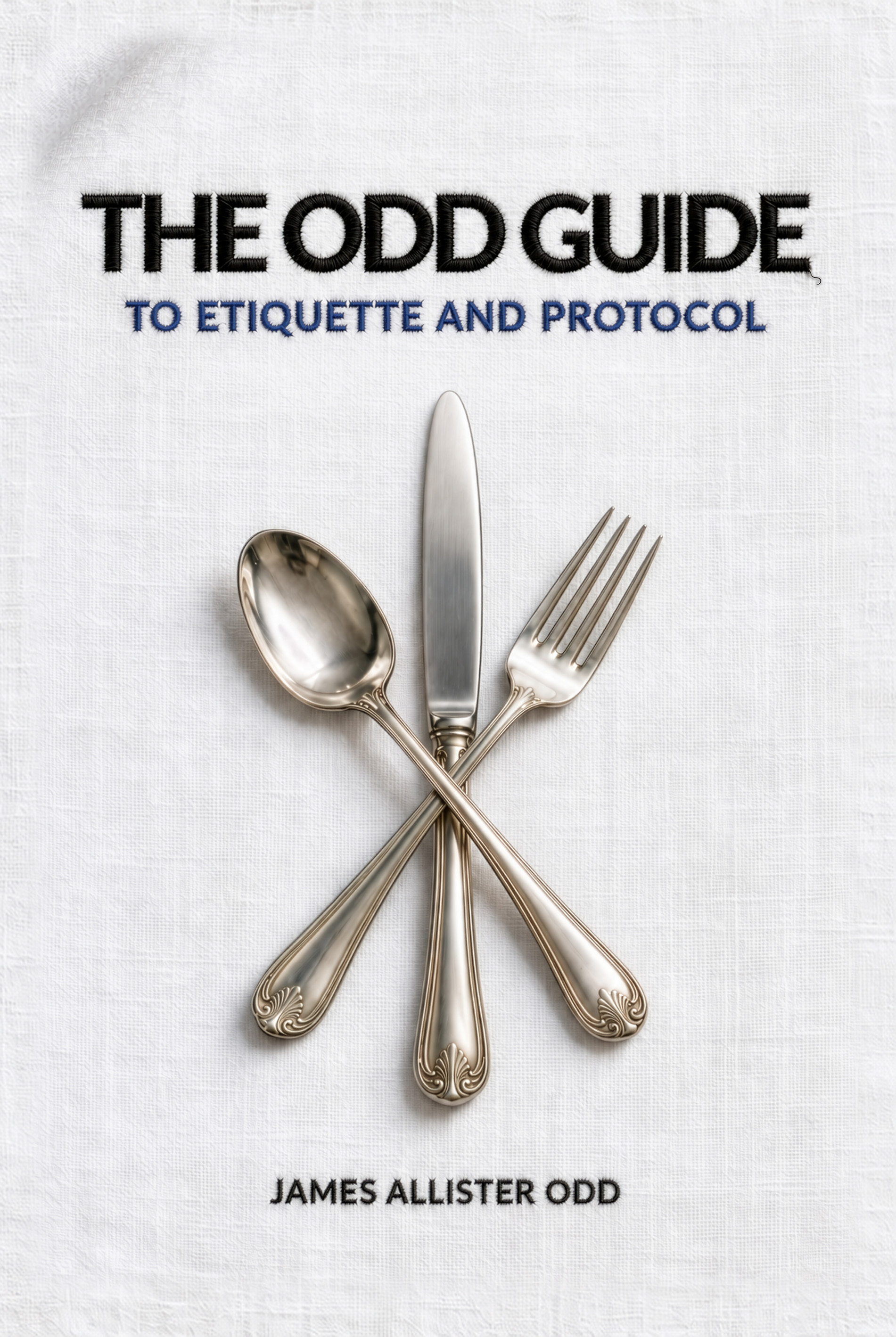
 THE ODD GUIDETO ETIQUETTE AND PROTOCOL

Practical guidance for everyday encounters, unfamiliar customs, and formal occasions, with references to the book.
Search all 239 entries in the final 4 × 6-inch paperback interior. Every result includes its exact printed page. Your question stays in this browser.
BOOK COMPANIONConcise guidance · verified page references
Choose a subject or search everyday situations from across the book.
This book began as a guide for my own use. Over the past twenty-five years, my life and work have brought me into unfamiliar social and cultural settings, each with expectations I needed to understand.
I gathered what I learned for practical reasons: to arrive prepared, conduct myself appropriately, and enjoy the occasion. In time, I also wanted to preserve that knowledge for my children—to give them somewhere to turn when they encountered a situation no one had explained, including when I was not there to help.
One experience changed the way I understood preparation. I was asked to attend a dinner at the White House, and beforehand I was required to take a crash course in etiquette and protocol. Once I understood the conventions, I could give more of my attention to the people around me.
“These things are learned. With practice, the details become familiar enough that they no longer occupy your attention.”
The wish behind the book is the same one I have for my children: that you can enter unfamiliar situations with confidence, conduct yourself with credibility and elegance, and use what you have learned to make someone else’s first experience a little easier.
James Allister Odd
Knowing the difference helps you recognize when an occasion calls for judgment and when it calls for precision.
The habits through which we show consideration for other people.
The conventions of a particular setting, from a family meal to a professional introduction.
The more formal arrangements governing roles, order, and official occasions.
The guide moves from daily social questions to formal public occasions without assuming prior knowledge, a particular background, or an expensive way of life.
Introductions, conversation, invitations, hosting, visiting, dining, dress, money, travel, neighbors, and shared spaces.
Professional conduct, correspondence, phones, calls, recording, privacy, public technology use, and repairing mistakes.
Meeting a partner’s family, illness and loss, funerals, religious occasions, community traditions, and entering an unfamiliar group.
Titles, introductions, delegations, official hospitality, ceremonies, honors, public officials, royalty, and formal social circles.
Hearing and vision differences, working animals, sensory comfort, accessible communication, and allowing time for a response.
Historical manuals, objects, court and diplomatic traditions, institutional records, and the changing purposes behind familiar rules.
You do not need to know the formal name of a custom before you begin.
Each entry begins with the recommended action, followed by the reason and useful exceptions.
Adapt the language to sound like you, and practice unfamiliar movements before the occasion.
Follow related topics, historical context, and the exact page reference for the first-edition paperback.
This companion searches all 239 entries using the book’s topics, familiar lookup terms, and approved opening guidance. It returns a concise answer and the exact printed page; the full context remains in the book. It does not create new guidance.